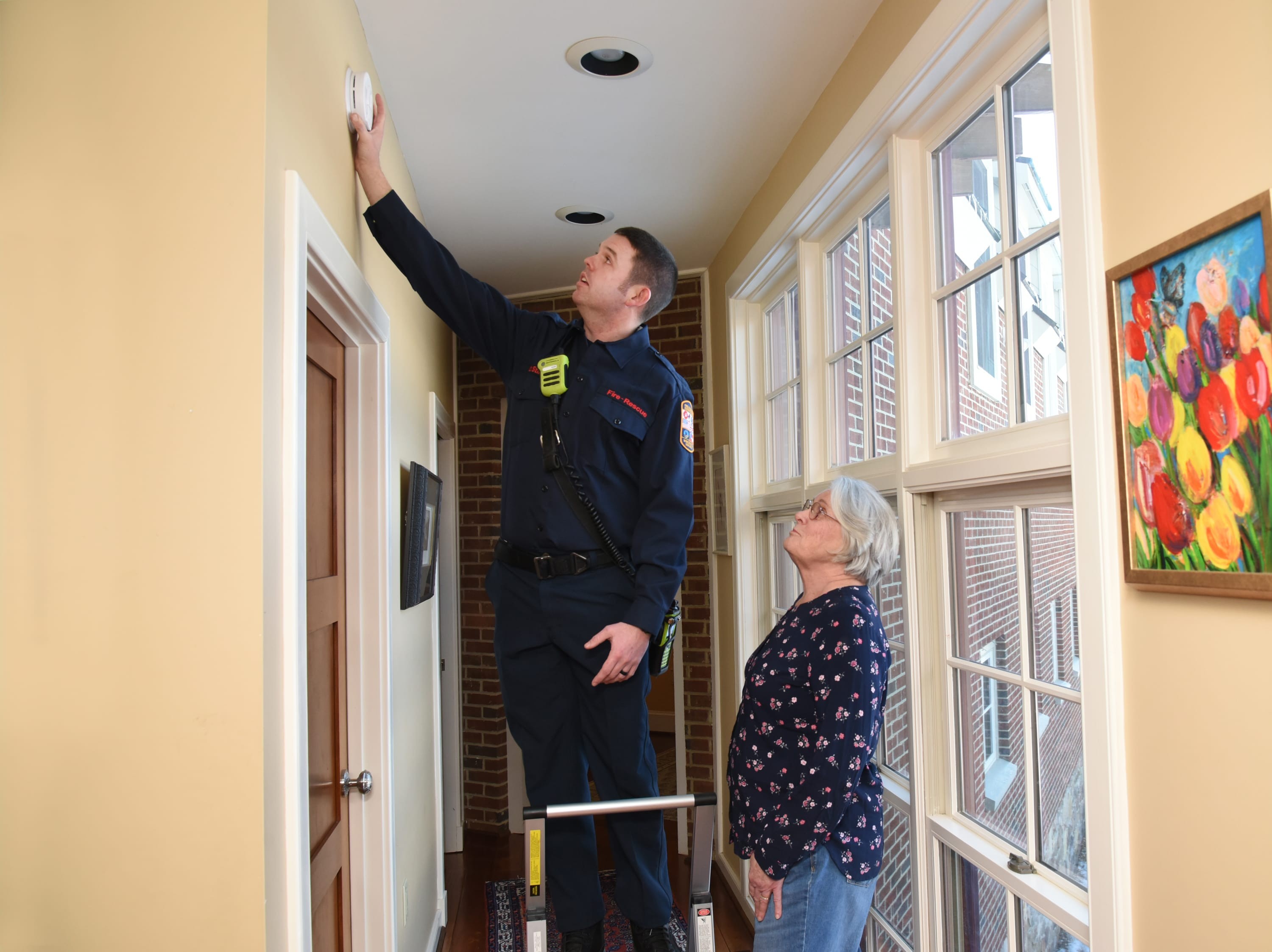
Start with two checks on every alarm: press the test button, then find the manufacture date and power type on the label. The U.S. Fire Administration advises monthly testing and says smoke alarms generally need replacement 10 years from the manufacture date. Our editorial view is to check the manufacture date and power type before buying a battery: an expired alarm needs full replacement, and a sealed long-life unit is not a battery-swap job.
The three maintenance intervals
| When | What to do | Decision point |
|---|---|---|
| Every month | Use the test button on every alarm. | If an alarm does not sound, follow its manufacturer instructions; replace it if instructed or if it is at end of life. |
| At least yearly | Replace a removable 9-volt battery or a hardwired alarm's replaceable backup battery. | Do not open a sealed 10-year battery compartment. |
| At 10 years | Replace the complete alarm based on its manufacture date. | Do not rely only on the purchase or move-in date. |
Step 1: inventory every alarm
Walk each level of the home, including the basement. USFA recommends alarms inside every bedroom, outside each separate sleeping area, and on every level. Note missing locations, the manufacture date, the power type, and whether interconnected alarms all sound together. Local codes and the manufacturer's placement instructions may add requirements.
Step 2: run the monthly button test
- Tell everyone in the home that you are testing.
- Use the alarm's built-in test button and follow its instructions.
- Confirm the alarm is loud enough to be heard in sleeping areas. Households with hearing loss should use compatible strobe or vibration alert equipment described by USFA.
- Record any unit that does not sound or does not trigger the interconnected set as expected.
The button test is the routine homeowner check described by USFA. Do not improvise with flame, smoke, or an open alarm housing.
Step 3: identify the battery type
- 9-volt battery alarm: USFA says to test monthly, replace the battery at least yearly, and replace the alarm every 10 years.
- Sealed 10-year lithium alarm: test monthly and replace the complete unit according to its instructions; the battery is not a routine replacement part.
- Hardwired alarm: test monthly, replace a replaceable backup battery at least yearly, and replace the alarm every 10 years. Only a qualified electrician should install or alter hardwired alarms.
Step 4: use the manufacture date
Remove the alarm from its mounting plate only as its instructions allow and read the date label on the back. USFA's guidance measures the 10-year interval from manufacture, not from the day you noticed the alarm. Replace a unit that has reached that age, and follow the model instructions if they specify an earlier end-of-life signal or replacement interval.
Never disable a nuisance alarm
USFA says not to remove the battery when cooking or steam triggers an alarm. Use the hush button and ventilation described by the manufacturer. If placement repeatedly causes nuisance alarms, use the manufacturer's location rules or ask the local fire department about a safer compliant location.
When to stop and get help
- The alarm sounds as a real warning: get outside, stay outside, and call emergency services from a safe location.
- A hardwired unit needs installation or wiring work: use a qualified electrician.
- You cannot safely reach the alarm: do not balance on furniture; ask for assistance or contact the local fire department's nonemergency line about available programs.
- The required type or placement is unclear: check the alarm manual and local fire marshal because state and local rules vary.
A simple record to keep
For each alarm, record its room, manufacture date, power type, last monthly test, last replaceable-battery change, and planned replacement date. Add the monthly test to the home maintenance schedule. For broader checks, use the home electrical safety checklist and the seasonal maintenance checklist.
The practical bottom line
Test every alarm monthly, match battery work to the actual power type, and replace aging alarms from the manufacture date. The goal is not to keep an old alarm quiet; it is to keep every sleeping area protected by a working system that people can hear and respond to.
Sources
These official references were used for the factual guidance and limits above.
- U.S. Fire Administration: placement, alarm types, monthly tests, batteries, replacement, nuisance-alarm guidance, and electrician stop condition
- U.S. Fire Administration infographic: manufacture-date check, 10-year replacement, and escape response
- U.S. Consumer Product Safety Commission: monthly testing and battery guidance