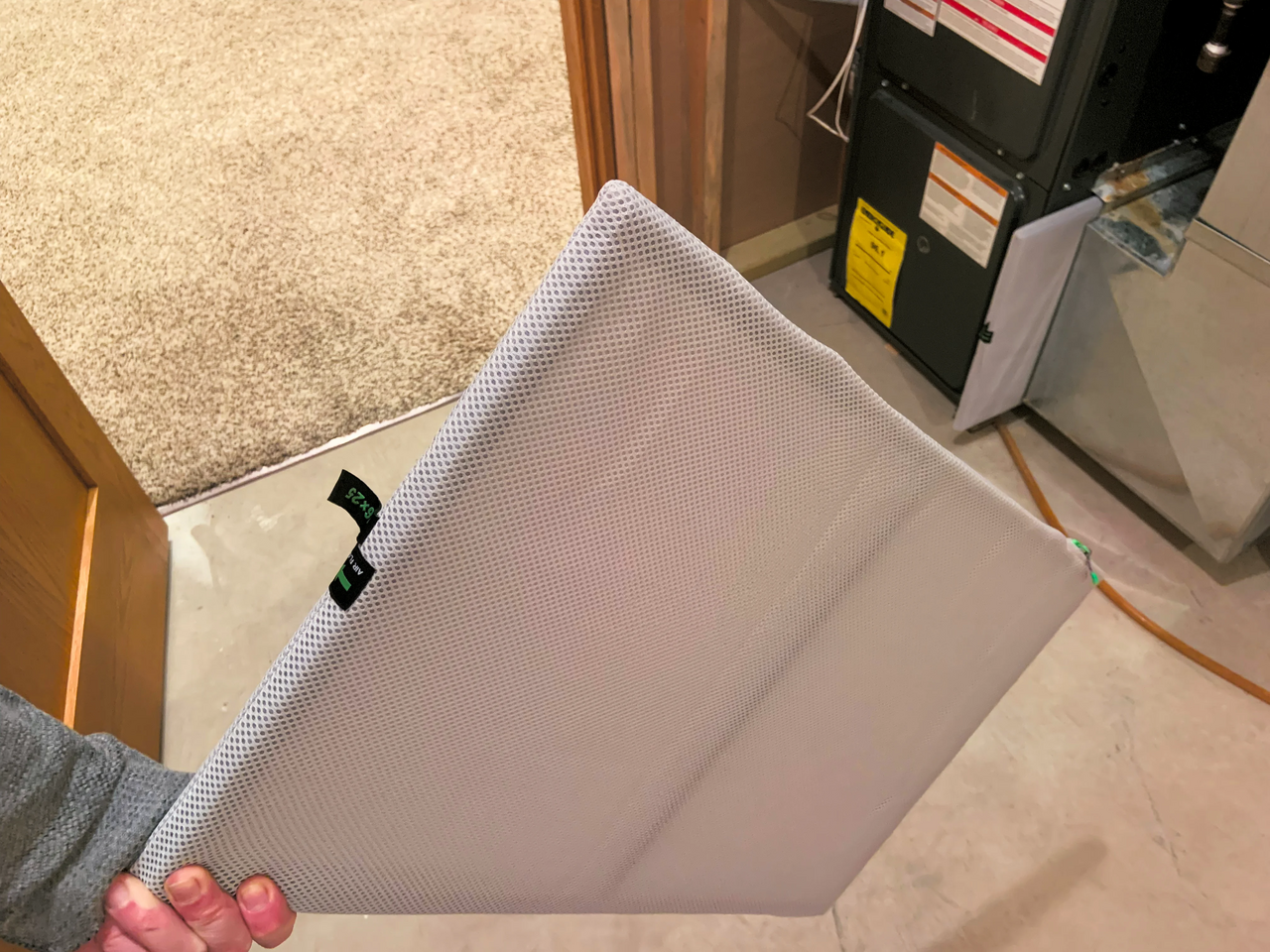
Cleaning an air-conditioner filter is usually straightforward, but the correct method depends on the equipment and filter. Some filters are washable; others are disposable. Check the label, owner’s manual, or filter frame before putting water anywhere near it. Our editorial judgment, based on the official guidance below, is to verify type, size, and fit before chasing a higher rating: a correctly installed approved filter is more useful than an impressive specification that restricts airflow or does not seal in the slot. Verify filter type, exact fit, and system compatibility before paying for a higher rating; a correctly installed approved filter is the useful upgrade.
Inspect the filter monthly during heavy heating or cooling use. Wash only a manufacturer-approved reusable filter; replace a disposable one with the correct dimensions, type, and airflow direction. Let a washable filter dry completely. ENERGY STAR says dirty filters make the system work harder, while DOE reports routine cleaning or replacement can reduce air-conditioner energy use by 5% to 15%.
Before you start
- Turn the air conditioner off. If your manual instructs you to disconnect power for filter access, follow that instruction.
- Find the exact model instructions before using water or a cleaning product.
- Prepare a soft brush or vacuum attachment, clean water if washing is allowed and a dry place for the filter.
- Do not remove sealed panels or reach into the electrical, refrigerant or fan compartments.
Check whether the filter is washable
A washable filter is normally labeled as reusable or washable and has a frame or mesh intended to be cleaned. A disposable filter is meant to be replaced; vacuuming or washing it can damage the media and change how air moves through the system.
If the label is missing, use the owner’s manual or the manufacturer’s support page for the exact model. Do not infer the filter type from appearance alone.
How to clean a reusable filter
- Switch the unit off. Wait until the fan has stopped before opening the filter access.
- Remove the filter gently. Note which way the airflow arrow points so you can reinstall it correctly.
- Remove loose dust. Use the low-power vacuum or soft-brush method allowed by the manual.
- Wash only if approved. Rinse with the recommended water direction and avoid harsh chemicals unless the manufacturer specifically calls for them.
- Let it dry completely. Place it in a well-ventilated area away from direct heat. A damp filter should not go back into the unit.
- Reinstall it in the original direction. Make sure it sits flat and the access panel is secure before restarting the unit.
When to replace a disposable filter
Use the size, type and replacement interval specified for your unit. ENERGY STAR recommends checking central-air filters monthly; if a filter is dirty, clean it when it is reusable or replace it when the system requires a disposable filter. Its broader guidance says a filter should be changed at least every three months, but your model, home conditions and manufacturer instructions may call for a different schedule.
Homes with pets, construction dust or frequent HVAC use may need more frequent checks. The visual condition of the filter and the instructions for your exact equipment matter more than a generic calendar.
Get the size, seal, and airflow direction right
Copy all three dimensions from the existing filter or equipment label; thickness is part of the size. EPA guidance says the filter should fit snugly without gaps, bending, or crushing. Gaps let air bypass the filter, while a forced fit can damage the media or frame.
- Photograph the old filter label before removal.
- Match length, width, thickness, and the manufacturer-approved filter type.
- Point the airflow arrow in the direction specified by the equipment label or manual—typically toward the blower, but use the exact system marking rather than guessing.
- Seat the filter flat and close the access panel fully.
Do not upgrade MERV by guesswork
MERV describes how well a filter captures particles in tested size ranges. For central forced-air systems, EPA recommends MERV 13 or the highest rating the system fan and filter slot can accommodate. That compatibility limit matters: the equipment manual or an HVAC professional should determine what the system can handle.
A window or wall-mounted air conditioner usually has limited filtration intended mainly to protect the unit, not to replace a room air cleaner. Use its model-specific filter rather than inserting central-HVAC media.
When to stop and call for service
Stop if you see damaged wiring, water near electrical parts, refrigerant lines, a burning smell, unusual electrical noise or a panel that is not intended for routine filter access. Filter cleaning does not replace professional coil, drain, refrigerant or electrical maintenance.
A simple maintenance schedule
| When | What to do |
|---|---|
| Monthly during heavy use | Inspect the filter and check for visible dust or damage. |
| When dirty | Clean a reusable filter using the approved method, or replace a disposable one. |
| After cleaning | Confirm the filter is fully dry, correctly oriented and seated. |
| Seasonally or as directed | Arrange professional maintenance for coils, drains, refrigerant and electrical components. |
Sources and image credit
- ENERGY STAR Maintenance Checklist — monthly inspection and maintenance boundaries.
- ENERGY STAR: Heat & Cool Efficiently — dirty-filter and replacement guidance.
- U.S. Department of Energy: Energy Saver 101 Home Cooling — filter maintenance and energy-use estimate.
- U.S. EPA: Guide to Air Cleaners in the Home — MERV, fit, compatibility, and room-unit limitations.
- Wikimedia Commons: HVAC air filter.webp — photo by Wikideas1, CC0; local copy saved as
air-filter.png.