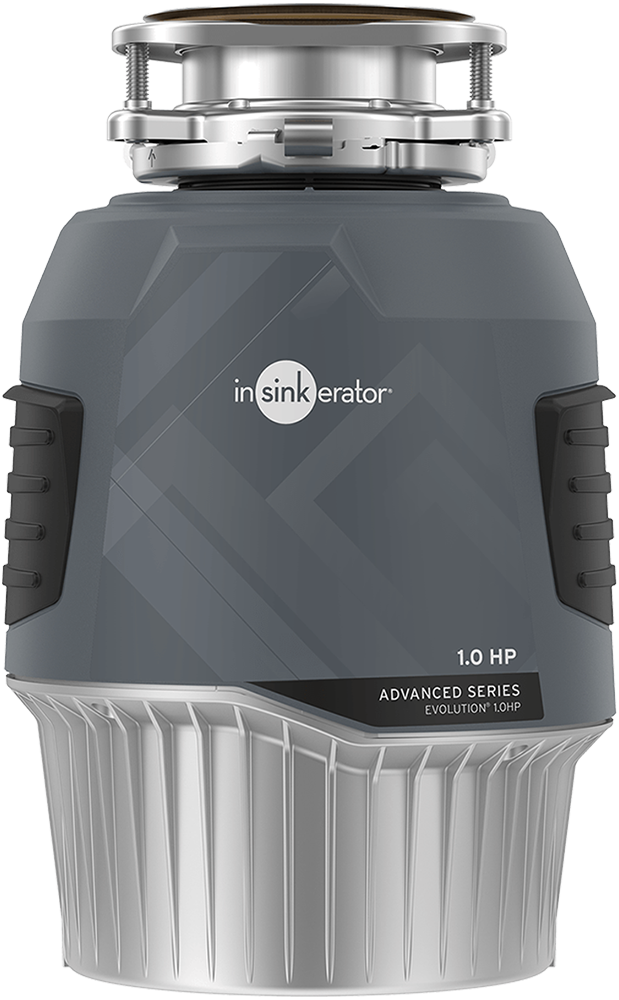
Short answer: Disconnect power first, confirm whether your model’s sink baffle or splash guard is removable, and clean the residue on that part before trying to mask the smell. When the disposal is reassembled and powered for flushing, use a steady stream of cold water. Never put a hand into the grinding chamber.
Why a garbage disposal starts to smell
InSinkErator and Whirlpool both point to food residue as a common cause. Small particles and greasy film can remain in the grind chamber, on the upper lip, or under the rubber baffle. Slow drainage or standing water can create a different odor problem, so a smell that returns immediately after cleaning may involve the drain or plumbing rather than the disposer surface alone.
Before cleaning: make the opening safe
- Turn the wall switch off.
- Disconnect power. Unplug the unit under the sink when accessible, or switch off the correct circuit breaker according to the model manual.
- Confirm that it cannot start. Keep anyone else from restoring power while you work.
- Use tools, not fingers. InSinkErator says not to put fingers or hands into a waste disposer. If a visible object must be removed, use long-handled tongs or pliers with power disconnected.
Clean the baffle and upper opening
- Check the manual. Some sink baffles lift out; others do not. Remove it only when the manufacturer says it is user-removable.
- Wash a removable baffle separately. Use dish soap, warm water, and a soft brush or non-damaging pad. Clean both sides, especially the underside.
- For a fixed baffle, clean only the accessible surfaces. Keep power disconnected and use a handled brush or cloth in the area the manual permits. Do not reach into the grinding chamber.
- Wipe the upper sink opening. Remove loosened film around the lip without pushing tools deeper into the unit.
- Reinstall the baffle correctly. Do not operate a disposal without its required splash guard or sound baffle in place.
Flush after reassembly
Once every part is back in its proper position and the work area is clear, restore power. InSinkErator recommends operating the disposal with a medium stream of cold water. Feed nothing by hand during this flush, then switch the disposal off and let the water run briefly to carry remaining particles through the drain.
Ice and citrus are optional, not the first fix
InSinkErator includes ice with lemon or lime wedges as a freshening method, while Whirlpool also describes manufacturer-approved cleaner and other model-specific options. These may help after basic cleaning, but they do not replace removing residue from the baffle. Use small amounts and follow the exact model instructions; do not treat citrus as a substitute for cleaning or as proof that a persistent drain problem is solved.
What not to put into the disposal
- Do not use caustic drain cleaners or similar products unless the exact manufacturer documentation explicitly permits a product.
- Do not pour fats, oils, grease, or hot liquids into the unit.
- Do not load glass, metal, plastic, utensils, or large whole bones.
- Do not force large amounts of fibrous or starchy scraps through at once.
- Do not operate the unit without the required splash guard in place.
Prevent the odor from returning
Use cold water before and during grinding, feed ordinary permitted food waste gradually, and let water continue briefly after grinding finishes. Keep fats and grease out of the drain. Inspect the baffle for trapped film and damage; replace it only with a compatible part when the manual calls for replacement.
When to stop and call for help
- The disposal hums, trips repeatedly, leaks, or has damaged wiring.
- The unit will not drain, or water backs up into another sink or appliance.
- The smell returns immediately despite cleaning accessible parts.
- Access would require removing the disposer, electrical work, or disassembling plumbing beyond the owner manual.
The practical bottom line
Our editorial view is to clean the baffle before buying a deodorizer or repeatedly grinding citrus. It is the most accessible residue trap named by both manufacturers, and it gives you useful evidence: if the smell remains after a safe, thorough surface clean, the next step is diagnosing drainage or arranging service—not adding more fragrance. Continue with the dishwasher filter cleaning guide, the safe leak checks, or more Kitchen guides.
Sources
These official references were used for the factual guidance and limits above.