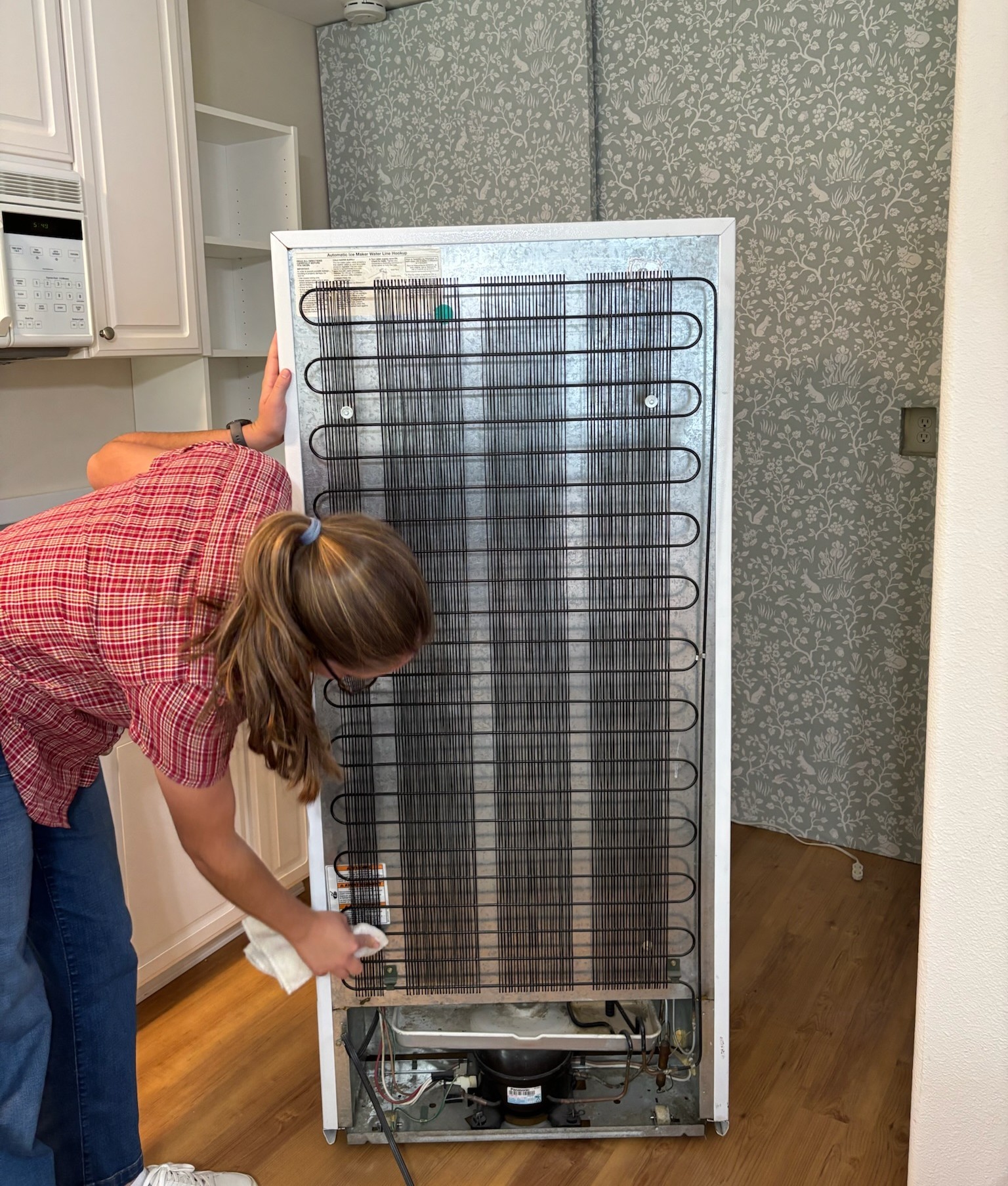
Short answer: Check the exact model manual before moving the refrigerator or removing a grille. Some refrigerators have owner-accessible condenser coils, while others need no routine coil cleaning or reserve access for a certified technician. If the manual permits owner cleaning, disconnect power and remove loose dust gently with a vacuum and soft brush. Our editorial view is to check the model manual before pulling the refrigerator forward or removing a grille: a soft vacuum pass is worthwhile only when the coils are owner-accessible and the manufacturer permits it.
Why the model manual comes first
Condenser design and access are not universal. GE says many of its refrigerators made since 2001 use a NeverClean condenser, while KitchenAid notes that some models require no cleaning and some should be handled only by a certified technician. Use the model number to find the current owner manual and follow its location and access instructions.
Before you touch the refrigerator
- Confirm that the manual permits owner access and identify whether the coils are behind a lower grille, at the back, or elsewhere.
- Disconnect electrical power before opening an owner-accessible grille or cleaning near the condenser.
- Make sure the refrigerator can move without pulling a water line tight or damaging the floor.
- Use only the access panel or grille the owner manual tells you to remove.
Tools that keep the job controlled
A vacuum with a soft brush or crevice attachment and a soft condenser-coil brush are usually enough. Avoid hard scraping, compressed-air blasts that spread debris into the room, and tools that can puncture tubing or bend delicate fins.
Clean owner-accessible coils step by step
- Disconnect power. Unplug the refrigerator or use the disconnect method stated in its manual.
- Open only approved access. Remove the base grille or owner panel exactly as the manual describes. Do not remove a service panel just to reach farther.
- Loosen dust gently. Use a soft brush on accessible surfaces without forcing it between tubing, fins, wiring, or the fan.
- Vacuum the debris. Collect loosened dust from the grille, floor, and accessible coil area. Keep the nozzle from striking tubing or electrical parts.
- Reinstall every grille or panel. Make sure it is secure and that no water line, cord, or wire has shifted.
- Restore power and inspect. Confirm normal operation, door clearance, and that the water connection is dry and unstressed.
There is no universal cleaning calendar
Whirlpool and KitchenAid both tie cleaning needs to the model and environment. Pet hair, cooking grease, heavy dust, or nearby construction can justify more frequent inspection. A clean home and a model designed without routine owner cleaning may need no scheduled coil work at all. Use visible buildup and the manual—not a generic six-month rule—to decide.
When to stop and call for service
- The manual says the condenser needs no cleaning or is technician-only.
- The refrigerator cannot be moved without pulling a water line, cord, or flooring.
- Access requires removing a service panel, or you see damaged wiring, tubing, or a refrigerant-related issue.
- Fins or tubing are already bent, corroded, oily, or difficult to reach safely.
- Cooling problems continue after safe, permitted cleaning. Use the refrigerator temperature troubleshooting guide for basic checks, then arrange qualified service when needed.
Keep the rest of the refrigerator working well
Coil care is only one part of refrigerator ownership. Verify food-zone temperature and storage practices with our refrigerator temperature and food storage guide, add model-specific tasks to the maintenance scheduler, and browse more cleaning guides.
Bottom line
The safest useful sequence is manual, power off, approved access, soft tools, and a clear stop point. A light vacuuming pass can remove accessible dust; reaching deeper than the manufacturer allows is not worth the risk.
Sources
These official references were used for the factual guidance and limits above.