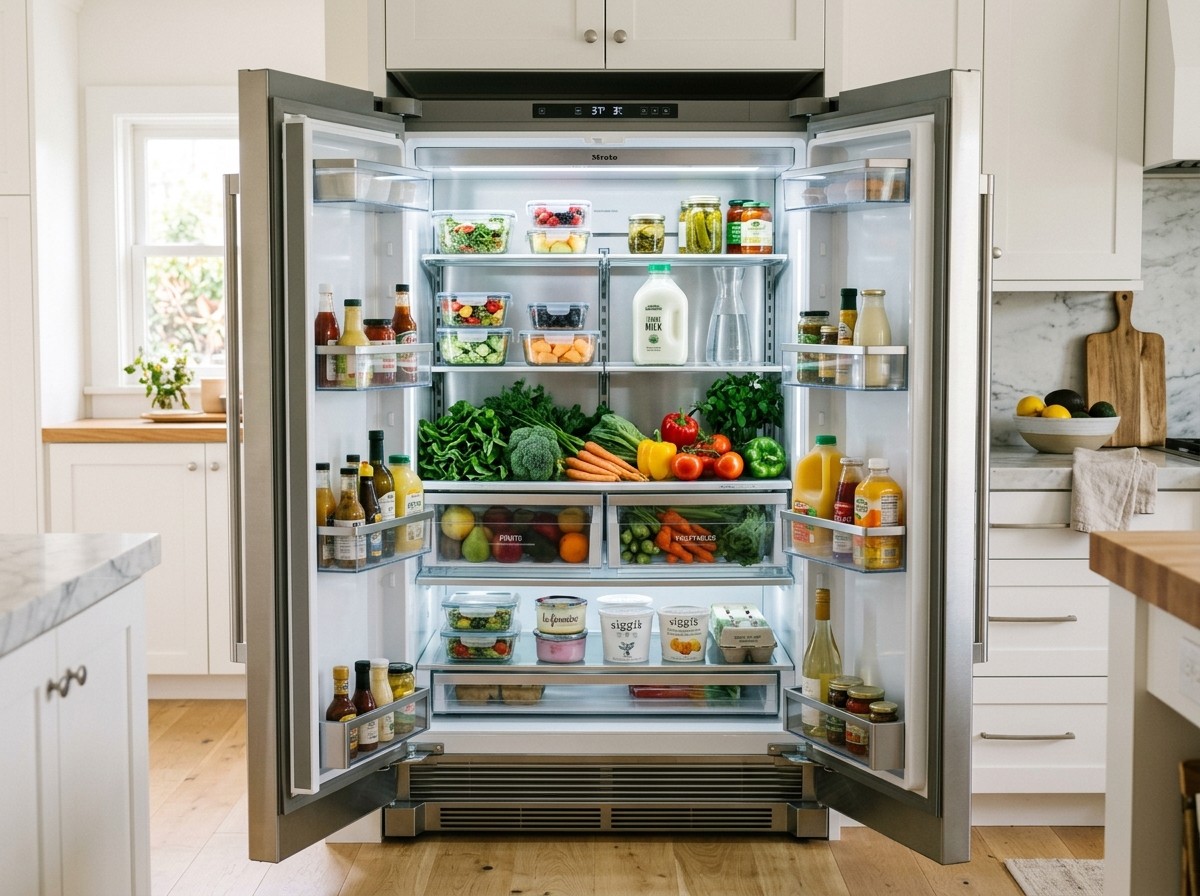
Over 70% of freezing complaints in refrigerator compartments are caused by blocked air discharge vents (placing bulky items directly against cold air louvers) or an incorrect temperature set-point (set to 37°F–38°F / 3°C for ideal safety and freshness). We would start with temperature, airflow, food placement, and the door seal before buying a part. A measurement that narrows the cause is more useful than a random reset.
1. Verify your temperature settings
The FDA and USDA recommend keeping your refrigerator compartment at 37°F to 40°F (3°C to 4°C) and the freezer at 0°F (-18°C).
If your digital controls were accidentally set below 36°F, liquid items and crisp vegetables (celery, cucumbers, lettuce) with high water content will begin to form ice crystals overnight. Adjust your thermostat to 37°F or 38°F and allow 24 hours for internal temperatures to stabilize.
2. Clear items blocking the cold air vents (The #1 Physical Culprit)
In most refrigerators (Whirlpool, GE, Samsung, LG), cold air is generated in the freezer and blown into the fresh food section through a top or back-wall vent.
If you push large milk jugs, cardboard egg cartons, or salad bags directly against this vent, the sub-freezing air blasts directly onto those items, freezing them solid while preventing the rest of the compartment from cooling properly. Keep a minimum 2 to 3-inch gap around all interior vents.
3. Inspect the magnetic door gasket (The Dollar Bill Test)
If warm room air leaks through a torn or dirty door gasket, the refrigerator's internal temperature sensor registers continuous heat. As a result, the compressor runs non-stop, driving temperatures on the lower shelves below freezing.
Close the refrigerator door on a dollar bill. If you can pull the bill out effortlessly without resistance, the magnetic seal is weak or dirty. Clean the rubber folds with warm soapy water or replace a cracked gasket.
4. Check the motorized air damper control
The air damper is a small motorized flap that opens and closes to meter cold air into the refrigerator. If the damper mechanism gets stuck in the OPEN position (due to frost buildup or a failed gear motor), freezing sub-zero air will continuously dump into your fresh food compartment.
If you feel continuous freezing airflow coming from the vent even after turning the temperature up, the damper assembly likely needs replacement.
When to stop and call for repair
If your vents are clear, seals are tight, settings are at 38°F, and items continue freezing solid throughout the compartment, the issue is electrical. Stop and arrange professional service if:
- The internal thermistor (temperature sensor) has drifted out of resistance specification and requires multimeter diagnosis.
- The electronic control board fails to cut power to the evaporator fan or compressor.
- Error codes related to temperature sensors (e.g., Samsung 5E, LG Er rS, GE 21) appear on the display.
Sources and official maintenance guides
- ENERGY STAR: Refrigerator Temperature and Storage Standards — optimal food safety and energy efficiency guidelines.
- Whirlpool Customer Support: Troubleshooting Food Freezing in Refrigerator — airflow and damper diagnostic procedures.
- GE Appliances Support: Fresh Food Freezing Solutions — thermistor and vent placement standards.