Choose Samsung if the extra capacity and AI Home display are useful to you. Choose LG if a simpler dial, a clear lint-removal routine and a 5.0 cu. ft. ventless format are the better fit. Neither model should be purchased until the installation dimensions, electrical requirements and local service coverage are confirmed. We would choose the system that matches the clothes and laundry rhythm you actually have. Noise, drying expectations, refill and filter work, capacity, and service access matter more than a longer feature list.
The models compared
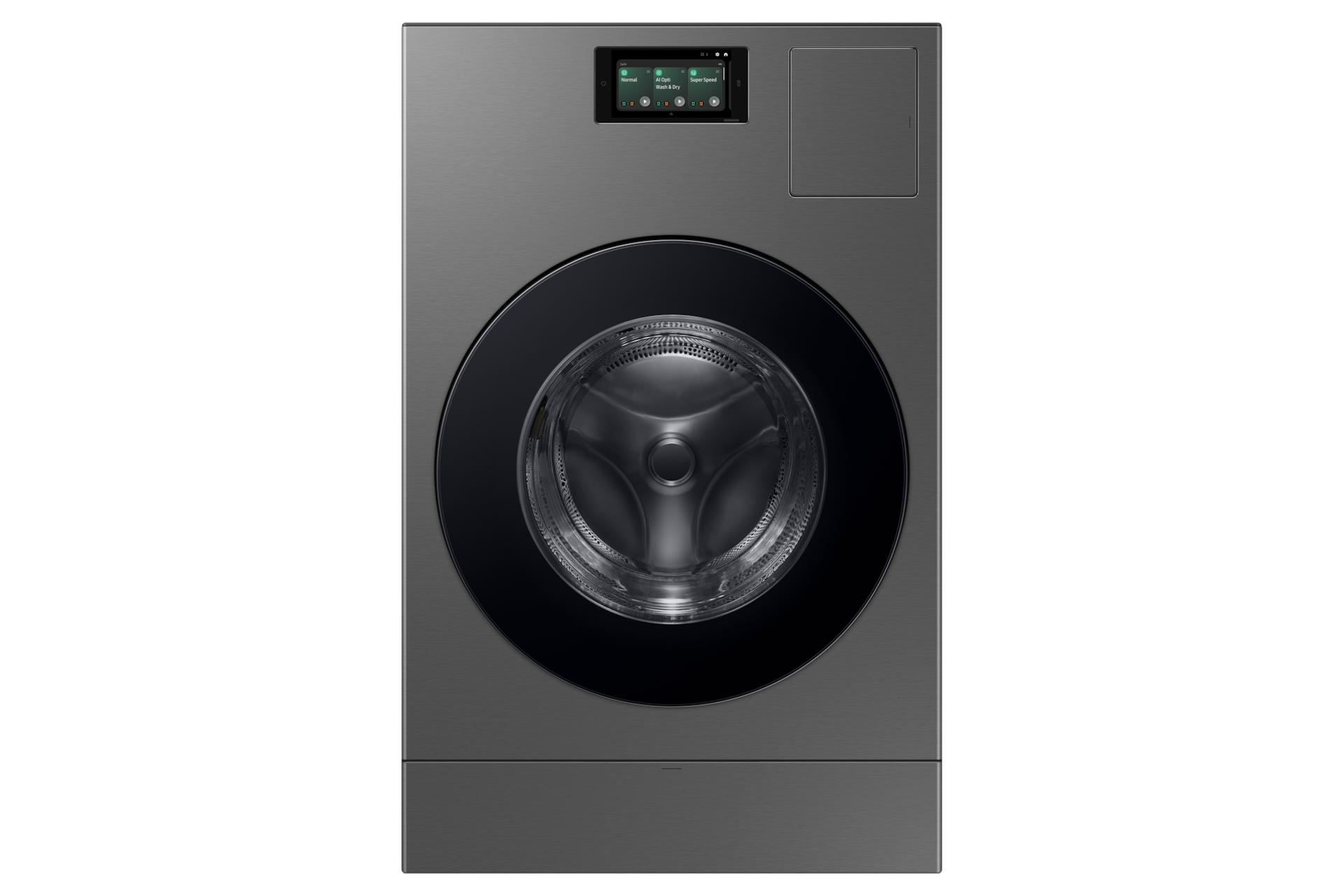
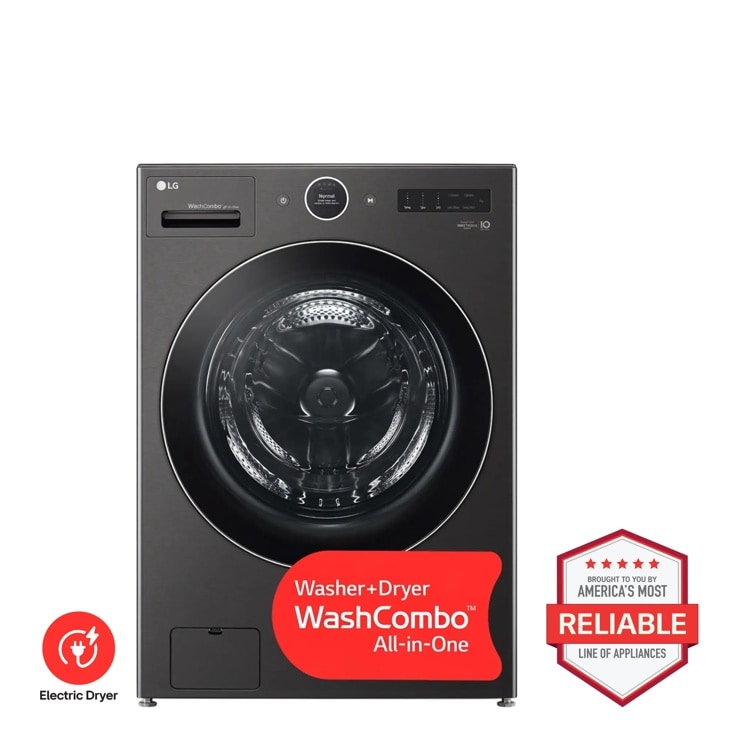
This comparison uses the Samsung Bespoke AI All-in-One Ventless Combo WD53DBA900HZA1 and the LG WashCombo All-in-One WM6998HBA. Both are washer-dryer combos designed to wash and dry in one appliance, so venting, service access and cycle expectations matter more than a longer feature list.
Model scope: Product pages and features change by country, revision and software. Confirm dimensions, electrical details, delivery, warranty and local service for the exact model before ordering.
| Decision point | Samsung Bespoke AI Combo | LG WashCombo |
|---|---|---|
| Model | WD53DBA900HZA1 | WM6998HBA |
| Capacity | 5.3 cu. ft. | 5.0 cu. ft. |
| Drying setup | Ventless all-in-one combo with heat-pump drying | Ventless all-in-one combo with Inverter HeatPump technology |
| Controls | AI Home 7-inch LCD display and AI OptiWash & Dry | LCD Digital Dial Control |
| Maintenance detail | Follow the model manual for filters, cleaning and service intervals | ezLintFilter plus a condenser filter included |
| Best starting point | Capacity and guided controls | Simple controls and an easy-to-find lint routine |
What changes day to day?
1. Ventless placement comes first
Both product pages emphasize ventless installation, but that does not mean every room is automatically ready. Check the required water, drain, electrical and clearance conditions before comparing screens or cycle features. A machine that cannot be serviced comfortably is not a good small-space choice.
2. Capacity is close, not identical
Samsung lists 5.3 cu. ft. and LG lists 5.0 cu. ft. The difference is modest, so it should not decide the purchase by itself. It matters more if your normal loads are bulky, you wash infrequently or you are replacing a separate large-capacity pair.
3. The control philosophy is different
Samsung leads with an AI Home touchscreen and AI OptiWash & Dry. LG leads with an LCD digital dial and a more direct control story. A smarter interface is only useful when it makes your common cycles easier to start; otherwise, the simpler control can be the better everyday choice.
4. Drying claims need context
LG advertises wash-and-dry cycles as fast as two hours under a stated test condition and highlights up to 60% less energy than similarly sized vented LG dryers. That is a manufacturer claim, not a universal head-to-head result. Load size, fabric, option selection, temperature and room conditions affect real cycle time. ENERGY STAR likewise describes certified heat-pump and combination savings at the model and usage level, not as a guaranteed bill reduction for every home.
Which one should you choose?
- Pick Samsung first if the 5.3 cu. ft. capacity and AI Home display solve a real problem for your household.
- Pick LG first if you prefer a dial-driven interface and want the product page's ezLintFilter and condenser-filter details to be easy to act on.
- Pause before either purchase if the machine will be tightly boxed in, if you cannot confirm service access or if your household needs consecutive loads with no drying delay.
A five-minute pre-purchase check
- Measure the opening, the full depth and the door-swing area—not just the width on the product page.
- Confirm the electrical outlet, water connection and drain arrangement with the installation guide.
- Ask how lint, condenser and pump maintenance will be handled in your exact installation.
- Check local delivery, installation, parts and service availability before paying for a premium feature set.
Bottom line
These are close competitors on paper, but they are not the same ownership experience. Samsung is the capacity-and-interface choice; LG is the simpler-control-and-maintenance choice. Start with your room and laundry routine, then use the feature differences to break the tie.
Related planning: check appliance measurements, the installation checklist, and the heat-pump vs vented dryer comparison before choosing a combo.
Sources and model links
- Samsung US: WD53DBA900HZA1 Bespoke AI All-in-One Ventless Combo — model capacity, display and feature details.
- LG US: WM6998HBA WashCombo — capacity, ventless design, controls and filter details.
- ENERGY STAR: Heat Pump Dryers — closed-loop operation and model-level efficiency context.