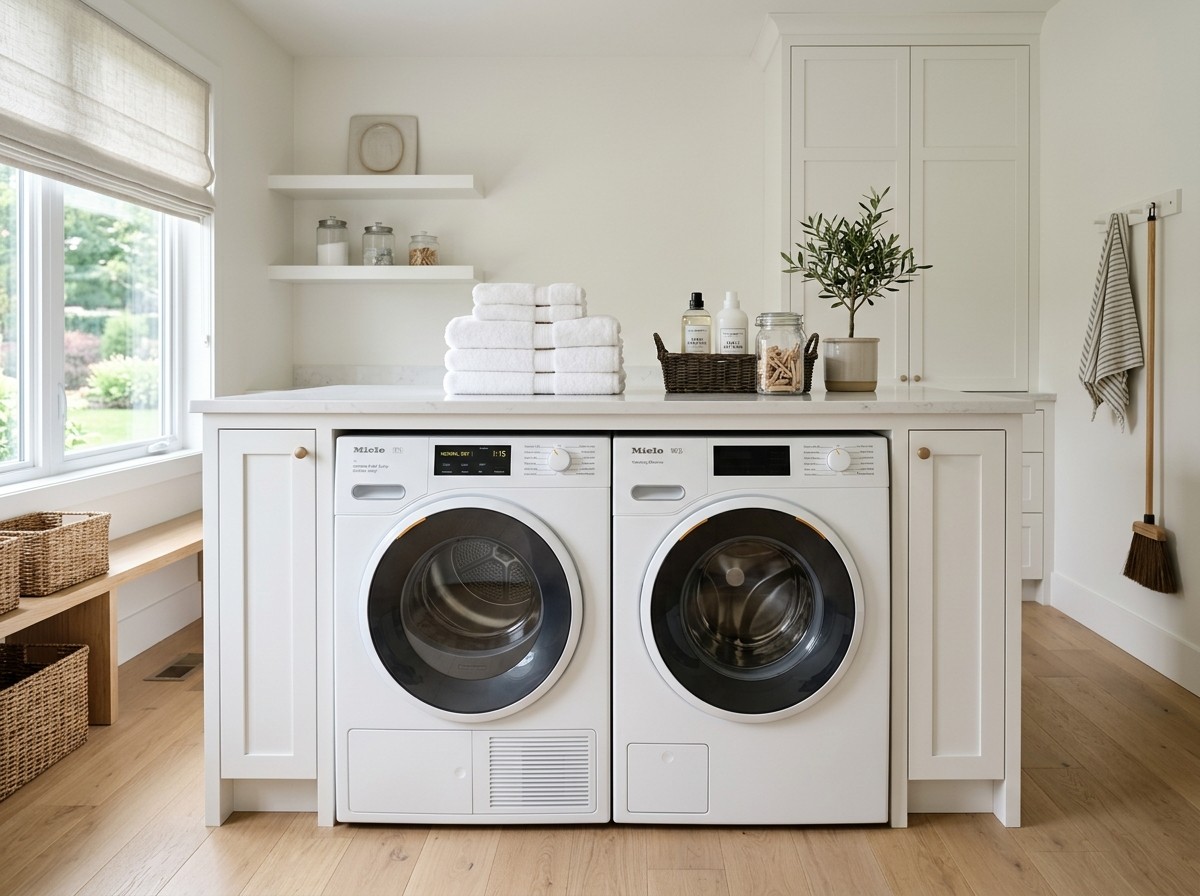
Choose a heat-pump dryer when you need ventless placement, lower-temperature drying or lower energy use. Choose a vented dryer when you already have a compliant exhaust path and prioritize a familiar fast-load rhythm. ENERGY STAR's savings figures describe certified models compared with conventional dryers; your result still depends on the model, load and electricity rate.
Side-by-side comparison
| Decision factor | Heat pump dryer (Ventless) | Vented dryer (Standard) |
|---|---|---|
| Exhaust duct | No exterior exhaust duct for the closed-loop drying path; drainage or a reservoir may still be required | Needs an approved exhaust route; confirm diameter, length, termination and local code |
| Energy use | ENERGY STAR says certified heat-pump dryers use around 70% less energy than conventional dryers | Usually uses more energy than a certified heat-pump model; compare the exact energy label |
| Cycle time | Model- and load-specific; ENERGY STAR notes typical certified-model dry times of about 37–70 minutes | Model- and load-specific; compare the cycles you actually use |
| Electrical connection | Model-specific; use the installation guide | Model-specific; many full-size electric units need a dedicated circuit |
| Fabric care | Lower-temperature drying can be gentler; follow the garment and appliance settings | Heat and cycle options vary; follow the garment and appliance settings |
| Upfront cost | Often higher, but varies by model and market | Often lower, but installation and vent work can change the total |
1. How heat pump drying actually works
A vented dryer draws air, heats it, passes it through the load and exhausts warm, humid air outside. That can make sense when a compliant duct already exists, but the duct, termination and airflow need to stay clear.
A heat pump dryer acts like a closed-loop air conditioner in reverse. It heats air to evaporate moisture from clothes, passes that moist air over cold refrigerant coils to condense the water into a drain or reservoir, and then reheats and recirculates the same air. No air leaves the room, and heat is constantly recycled.
2. Cycle speed vs. energy savings
Heat-pump cycles can feel different because the air is reused at a lower temperature. Do not promise a fixed extra time or dollar saving: load size, moisture, cycle choice, model efficiency and local electricity rates all matter. ENERGY STAR says certified heat-pump dryers use around 70% less energy than conventional dryers and notes typical certified-model dry times of about 37–70 minutes.
3. Installation freedom and small-space fit
Ventless placement expands options, but it does not mean “anywhere.” Confirm clearance, floor loading, drainage or reservoir access, electrical requirements, humidity management and service access in the exact installation guide. A closet or pantry still needs a safe, serviceable setup.
4. Maintenance: Lint filter plus condenser care
Every dryer needs its lint filter maintained. Heat-pump models also use a condenser or moisture-management system, and some require extra filter or drain care. Follow the manual for cleaning intervals and do not assume a generic “every few months” rule fits every model.
Which one should you buy?
- Buy heat pump first if you need ventless placement, lower-temperature drying or want to compare certified energy savings against your usage.
- Buy vented first if the exhaust route is already compliant, serviceable and clear, and your priority is a familiar repeated-load routine.
Next useful checks: see the dryer vent cleaning schedule and compare ventless laundry combos before measuring your room.
Sources and efficiency data
- ENERGY STAR: Clothes Dryers — around-70% energy context for certified heat-pump models and closed-loop operation.
- ENERGY STAR: Heat Pump Dryer — ventless installation, lower-temperature drying and model-level limits.
- U.S. Department of Energy: Energy Saver Laundry Guide — laundry energy guidance.