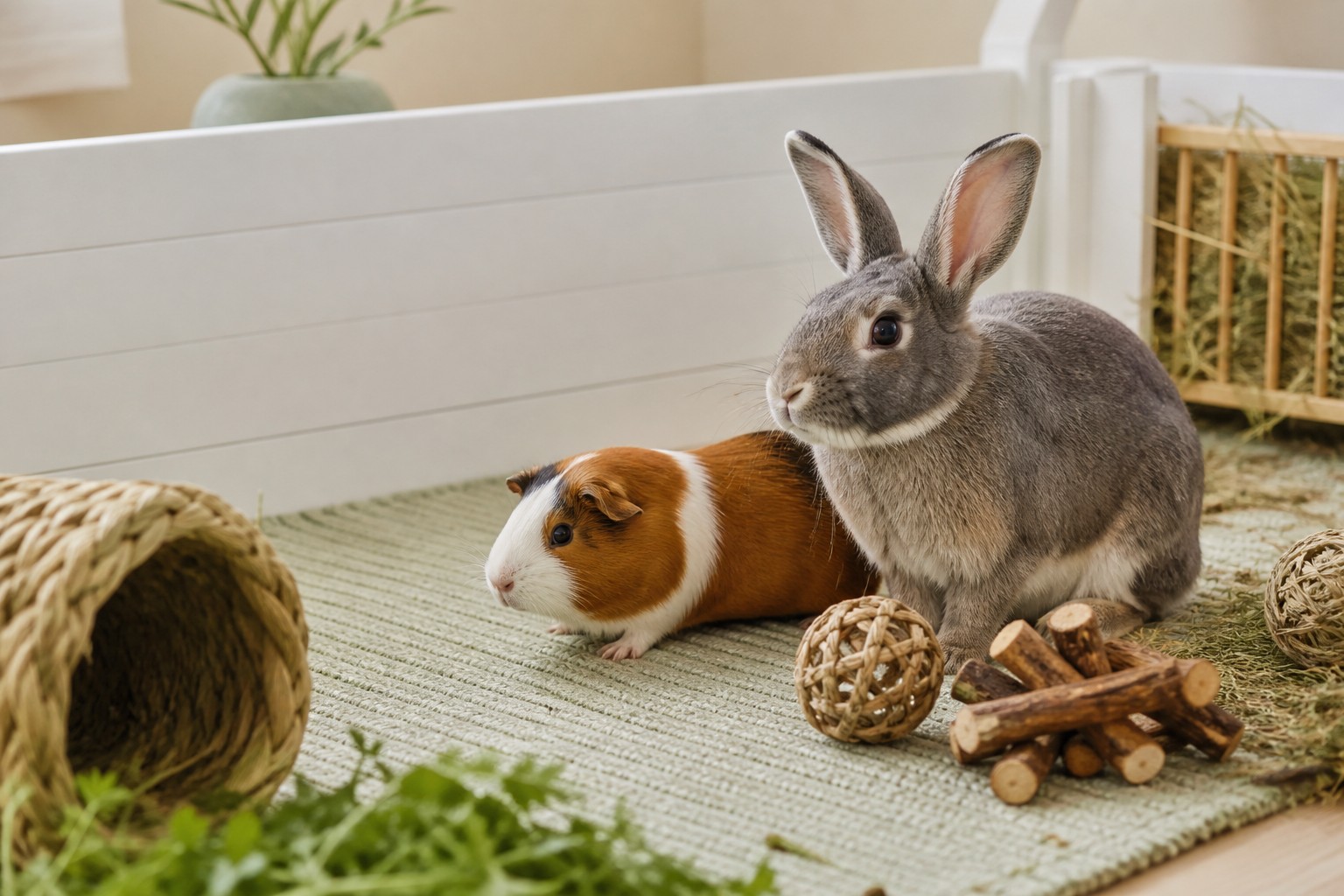
Short answer: A healthy rabbit diet is built around constant access to grass or good-quality hay, plus fresh water, a variety of leafy greens, and a small measured amount of rabbit pellets. Sweet treats are occasional extras, not a substitute for fiber. We would build the routine around hay, appetite, droppings, water, and daily observation before optimizing treats or accessories. The boring baseline is what makes a small change visible.
Let hay and grass do the heavy lifting
The RSPCA describes hay or grass as the bulk of a rabbit's diet. Offer fresh, dust-free hay every day in more than one easy-to-reach place. Long fiber supports normal chewing and gut movement, so a rabbit that stops eating hay needs attention even if it still accepts treats.
Serve greens gradually and rotate them
Introduce new greens slowly and choose a varied mix of rabbit-safe leafy vegetables. Wash produce, remove wilted leftovers, and observe droppings after each change. A sudden large serving of unfamiliar food can upset digestion, especially in a young or previously restricted rabbit.
Measure pellets and keep treats small
Use a plain, high-fiber rabbit pellet as a measured supplement rather than leaving a full bowl available all day. Fruit and starchy root vegetables are best reserved for tiny portions. Avoid muesli-style mixes, sugary snacks, and fresh lawn clippings that may contain pesticides or become fermented.
Watch appetite, droppings, and teeth
Fresh water should be available at all times. Daily checks should include appetite, water intake, droppings, posture, and the condition of the mouth and coat. Fewer droppings, a hunched posture, repeated tooth grinding, or refusing food is urgent for rabbits because gut slowdown can become life-threatening; contact a rabbit-experienced veterinarian promptly.
The bottom line
Use this guide as a practical starting point, then adjust for the individual animal, life stage, health history, and advice from a qualified veterinarian when health or appetite changes are involved.
Sources
These primary care and welfare references were inspected for the guidance above.