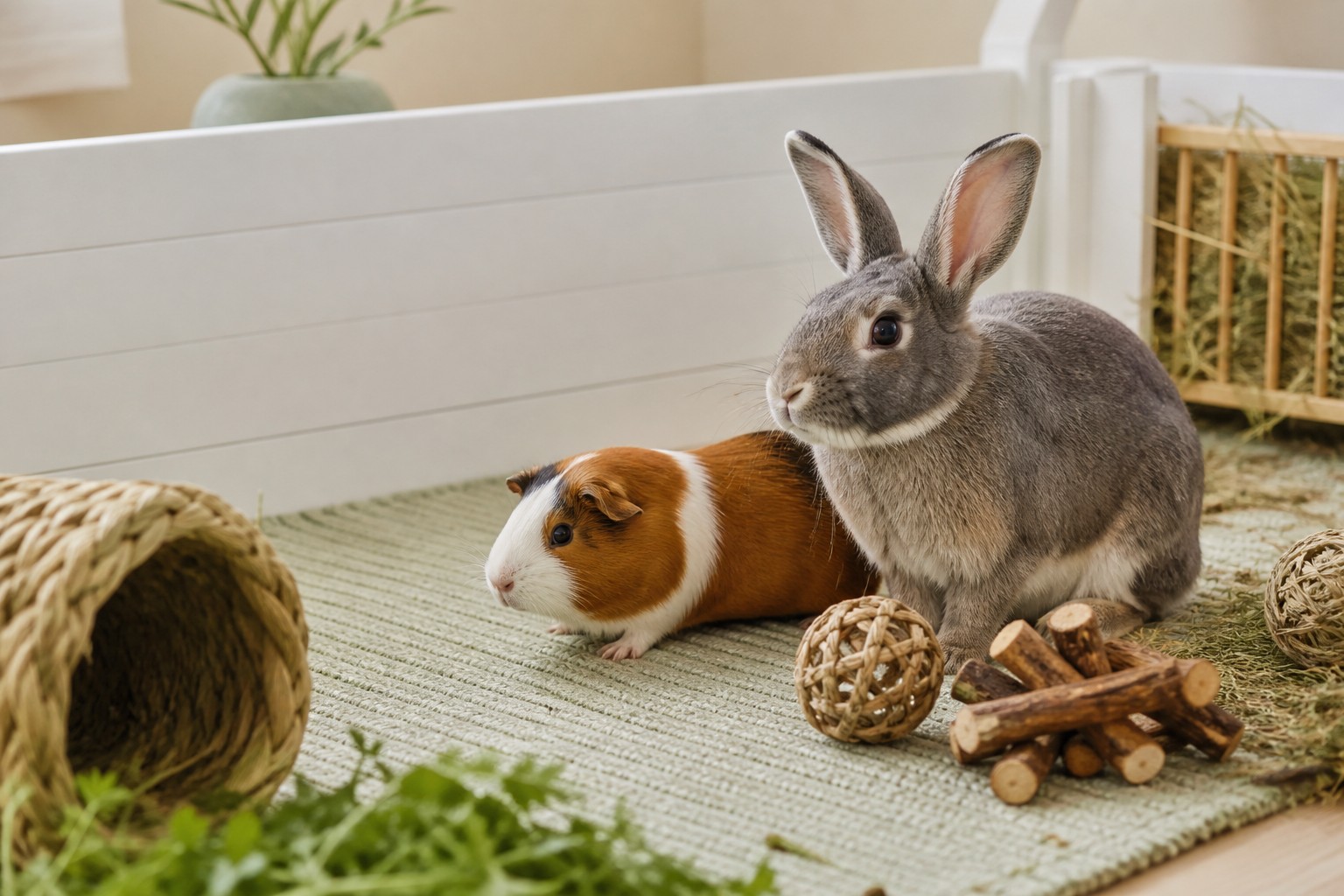
Good guinea pig care is a daily rhythm: unlimited grass hay, a reliable vitamin C source, fresh water, a roomy secure enclosure, safe hiding places, and gentle observation. Guinea pigs are social prey animals, so companionship and low-stress handling matter as much as the shopping list. We would make the species’ daily baseline easy to observe—food, water, waste, movement, breathing, and temperature—before optimizing equipment or treats.
Build meals around fiber and vitamin C
Keep fresh hay available at all times and provide a measured guinea pig pellet made for the species. Add washed vegetables in a varied routine and make sure the diet supplies vitamin C, because guinea pigs cannot manufacture it themselves. Ask a veterinarian about the right source and amount for your individual pet rather than adding supplements at random.
Choose a secure, roomy home
A solid, well-ventilated enclosure with a comfortable floor is easier on feet than wire flooring. Provide multiple hides, dry bedding, and enough uninterrupted space for exercise. Keep the habitat away from direct sun, drafts, fumes, and loud household traffic, and clean wet areas before odor and ammonia build up.
Plan social contact safely
Guinea pigs usually benefit from compatible guinea pig company. Introduce animals gradually in a neutral, cleaned space and monitor for bullying. Do not assume a rabbit is a safe default companion: the RSPCA notes differences in diet, communication, and health risks, so discuss mixed-species housing with a qualified professional.
Make a two-minute health check normal
Look for normal eating, droppings, movement, breathing, eyes, coat, and nails each day. Weight loss, drooling, diarrhea, breathing difficulty, a swollen abdomen, or sitting quietly away from a companion warrants prompt care from a veterinarian familiar with small mammals. Gentle handling and predictable routines help you notice changes early.
The bottom line
Use this guide as a practical starting point, then adjust for the individual animal, life stage, health history, and advice from a qualified veterinarian when health or appetite changes are involved.
Sources
These primary care and welfare references were inspected for the guidance above.