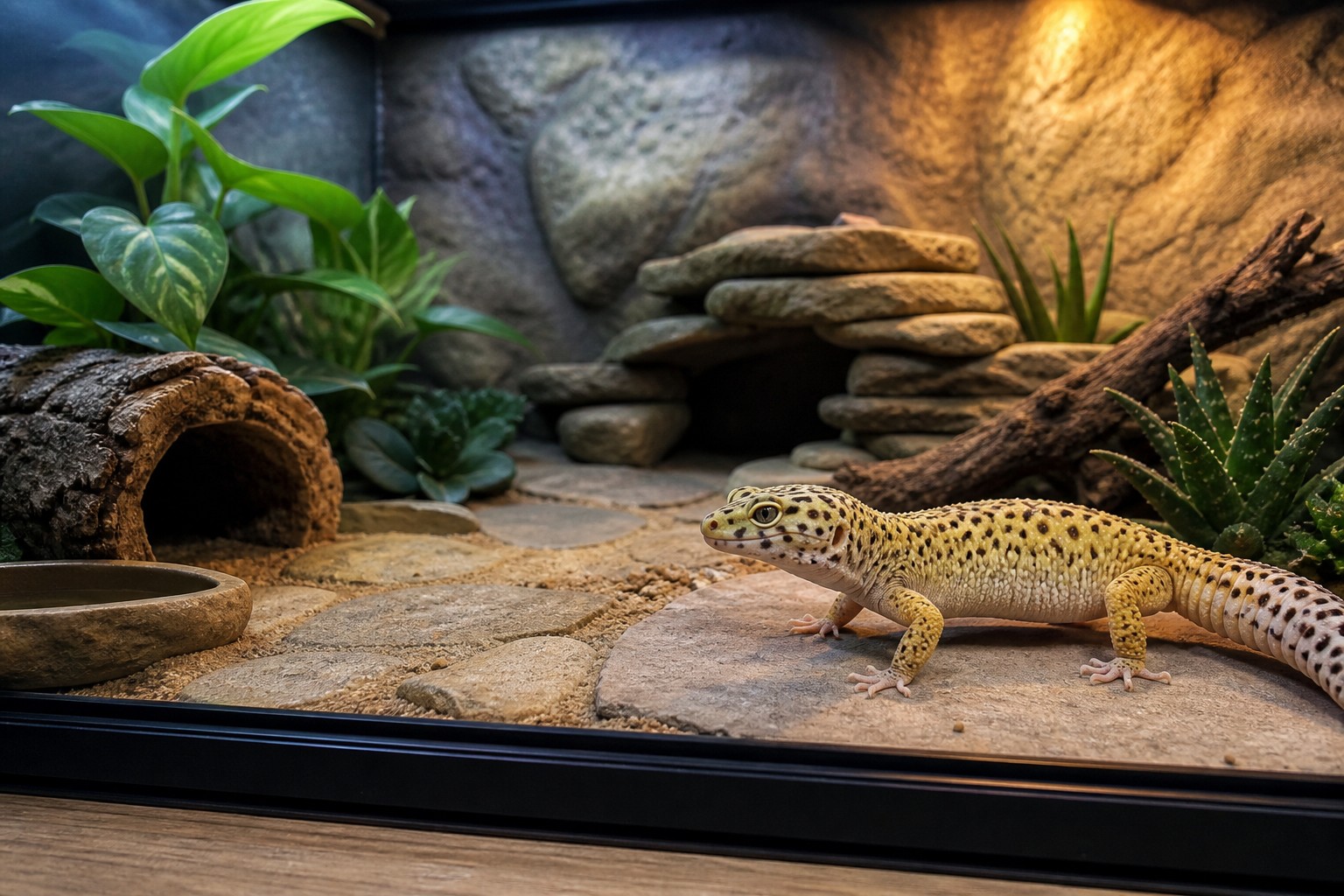
Start with measurements, not decoration. A leopard gecko needs a secure enclosure with a warm side, a cooler retreat, a humid hide, and ventilation that prevents stagnant dampness. Use reliable digital thermometers and check the setup before the gecko moves in. We would measure heat, UVB, humidity, and the cool retreat before buying more décor. A setup that looks natural but cannot be measured is hard to correct safely.
Create a usable heat gradient
Merck lists leopard gecko husbandry ranges that support a warm zone around 25-30 C while allowing the animal to move away from the heat. The exact surface temperature depends on the heating method and enclosure, so measure at the basking surface and at the cool end rather than trusting a room thermostat alone. Protect heaters with a guard and use a thermostat.
Keep ambient air dry but add a humid hide
Leopard geckos are adapted to relatively dry conditions, often around 20-30% ambient humidity, with access to a more humid hide for shedding. Place the humid hide at the warm-to-middle transition, keep it clean, and use a hygrometer to catch a constantly damp enclosure or a hide that has dried out.
Offer three kinds of cover
Use a warm hide, a cool hide, and a snug humid hide so the gecko can choose comfort without giving up security. Furnishings must be stable and free of sharp edges. Provide a shallow water dish, suitable climbing texture, and enough floor space for a full-body turn.
Choose substrate and ventilation carefully
A simple, easy-to-monitor substrate is useful while a new setup is being tested. Avoid loose materials that create ingestion or impaction concerns in an unsupervised animal, and keep food away from dusty surfaces. Appetite loss, stuck shed, tail thinning, lethargy, or repeated abnormal stools should prompt an exotics veterinarian visit.
The bottom line
Use this guide as a practical starting point, then adjust for the individual animal, life stage, health history, and advice from a qualified veterinarian when health or appetite changes are involved.
Sources
These primary care and welfare references were inspected for the guidance above.