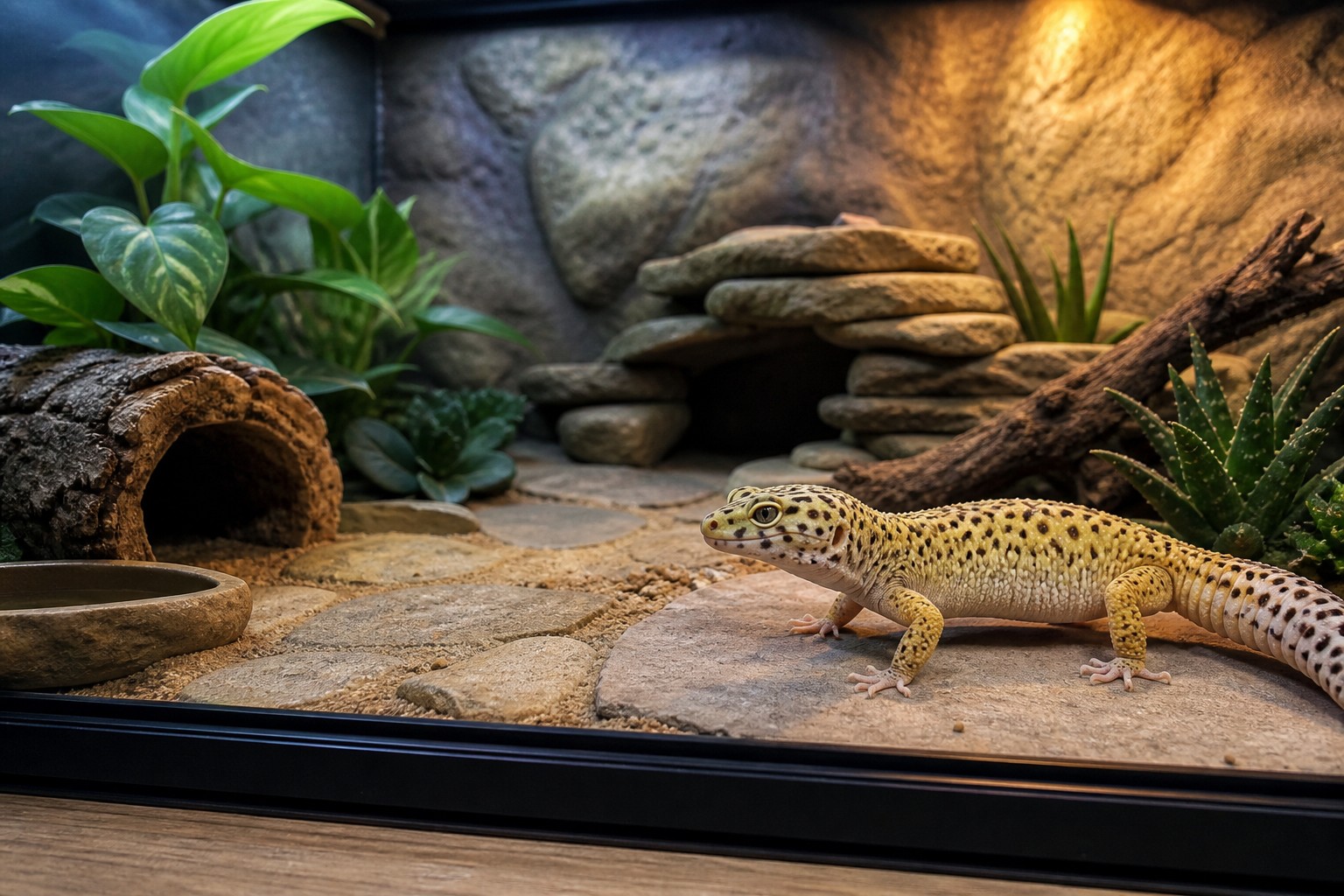
UVB and heat are husbandry tools, not a single bulb. A bearded dragon needs a broad-spectrum UVB source, a measured basking area, a cooler retreat, and enough enclosure length to move between them. The setup should be tested with the exact fixture, mesh, distance, and furnishings you will use. We would measure heat, UVB, humidity, and the cool retreat before buying more décor. A setup that looks natural but cannot be measured is hard to correct safely.
Pair UVB with a full gradient
Merck emphasizes species-specific temperature and lighting requirements for reptiles. Put the UVB and heat source over one end so the dragon can warm up and then leave the beam. Use digital probes or an appropriate infrared thermometer to check the basking surface and cool zone, and adjust for seasonal room changes.
Check distance and barriers
UVB output changes with lamp type, age, distance, and anything between the lamp and the animal. Follow the fixture manufacturer's measured distance, replace bulbs on schedule, and remember that glass blocks useful UVB. Secure every lamp outside the reach of claws and protect hot surfaces from contact burns.
Give shade, airflow, and a reliable routine
Include a shaded hide, strong ventilation, and a light schedule that leaves a predictable dark period. Do not seal a hot enclosure without airflow or place it beside a sunny window where temperatures can spike. Recheck readings after moving a branch, changing substrate, or replacing a lamp.
Know when setup may be affecting health
Persistent lethargy, weakness, tremors, poor appetite, soft jaw or limbs, repeated falls, or abnormal growth needs an exotics veterinarian assessment. Lighting cannot correct every illness, and adding extra supplements without diagnosis can create new problems. Bring your temperature and lamp notes to the appointment.
The bottom line
Use this guide as a practical starting point, then adjust for the individual animal, life stage, health history, and advice from a qualified veterinarian when health or appetite changes are involved.
Sources
These primary care and welfare references were inspected for the guidance above.