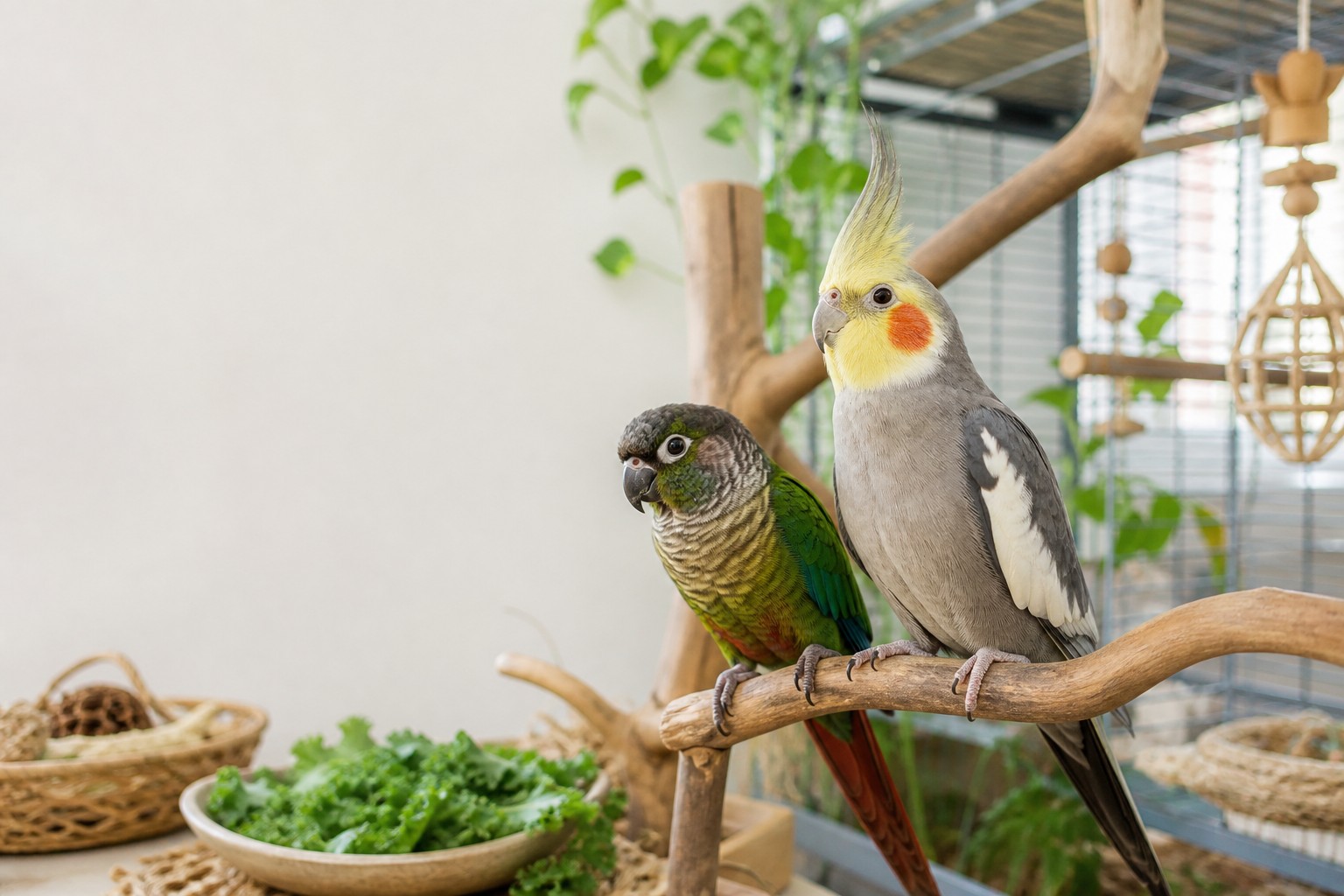
Short answer: Most companion cockatiels do best with a formulated pellet as the nutritional base, a daily variety of bird-safe vegetables, a little fruit, fresh water, and seeds used as a small treat rather than the whole diet. Your bird's veterinarian can adjust the mix for age, body condition, and medical needs. We would make the species’ daily baseline easy to observe—food, water, waste, movement, breathing, and temperature—before optimizing equipment or treats.
Make pellets the dependable staple
VCA recommends that pellets make up roughly 75-80% of a cockatiel's diet. Offer a fresh measured portion in a clean dish and watch what your bird actually eats, because a bowl that looks full may contain mostly discarded pieces. Introduce a new pellet gradually and keep a close eye on weight during any change.
Add color and texture with produce
Leafy greens, bell pepper, broccoli, carrot, squash, and other bird-safe vegetables can supply variety and enrichment. Rinse produce, cut it into manageable pieces, remove leftovers after a few hours, and rotate colors rather than relying on one favorite. Fruit is sweeter, so keep it to small portions.
Keep seeds and table foods in their place
Seed mixes are attractive but can be nutritionally uneven when a cockatiel picks only high-fat favorites. Use a few seeds for training or foraging. Avoid avocado, onion, garlic, chocolate, alcohol, caffeine, salty foods, and fruit pits or seeds. Do not add grit unless an avian veterinarian specifically recommends it.
Use appetite as a health signal
Healthy feeding includes clean water changed daily, clean bowls, and regular weight checks with a gram scale. A sudden drop in appetite, fewer droppings, vomiting, weakness, or fluffed-up quiet behavior deserves prompt veterinary advice. Birds often hide illness, so a small change can matter.
The bottom line
Use this guide as a practical starting point, then adjust for the individual animal, life stage, health history, and advice from a qualified veterinarian when health or appetite changes are involved.
Sources
These primary care and welfare references were inspected for the guidance above.