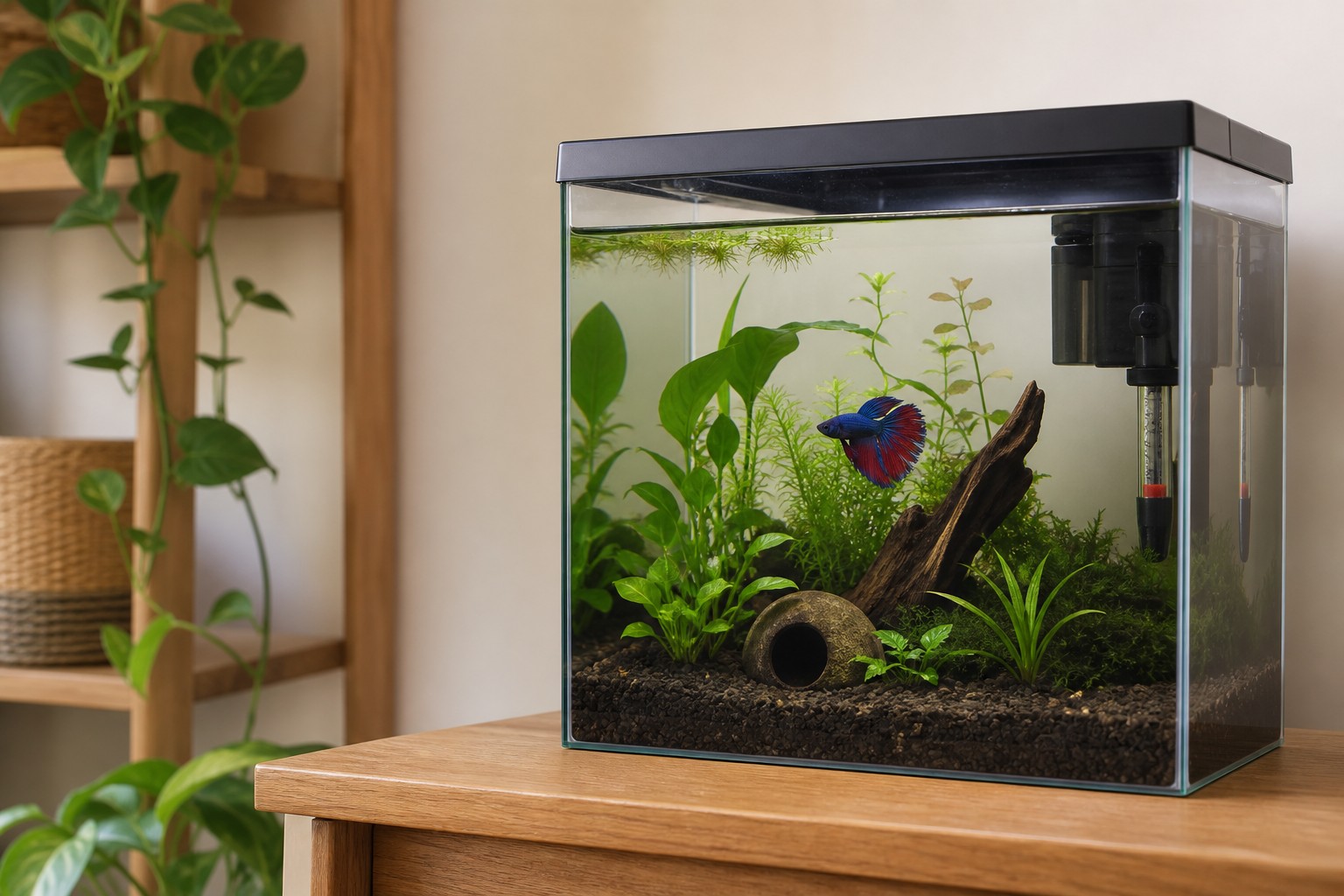
A betta bowl is not a complete habitat. A stable aquarium gives the fish room to turn, warm conditioned water, gentle filtration, a secure lid, and cover. PetMD lists 2.5 gallons as a minimum; a 5-10 gallon tank is often easier to keep stable for a new keeper. We would make the species’ daily baseline easy to observe—food, water, waste, movement, breathing, and temperature—before optimizing equipment or treats.
Choose volume, lid, and gentle movement
Use a level tank with a lid because bettas can jump. A sponge or adjustable filter should create circulation without pinning long fins against the intake. Add smooth plants, resting leaves, and a hide with no sharp openings. Leave swimming room at the surface.
Control temperature and water quality
Use a reliable heater and thermometer to keep water in a stable tropical range, roughly 76-81 F, rather than relying on a warm room. Treat tap water with a conditioner that handles chlorine and chloramine. Test ammonia, nitrite, nitrate, and pH with an aquarium kit, and do not add a fish to an uncycled tank simply because the water looks clear.
Cycle before and maintain after stocking
A fishless cycle gives beneficial bacteria time to process waste. Once stocked, remove uneaten food, siphon debris, and make partial water changes with temperature-matched conditioned water. Never replace all filter media at once because that can remove the bacteria that support the cycle.
Use behavior as a water-quality clue
Clamped fins, gasping, staying at the surface, rapid breathing, pale color, or sudden hiding can signal stress, temperature trouble, poor water quality, or illness. Test water first, correct changes gradually, and contact an aquatic veterinarian or experienced fish professional when signs persist.
The bottom line
Use this guide as a practical starting point, then adjust for the individual animal, life stage, health history, and advice from a qualified veterinarian when health or appetite changes are involved.
Sources
These primary care and welfare references were inspected for the guidance above.