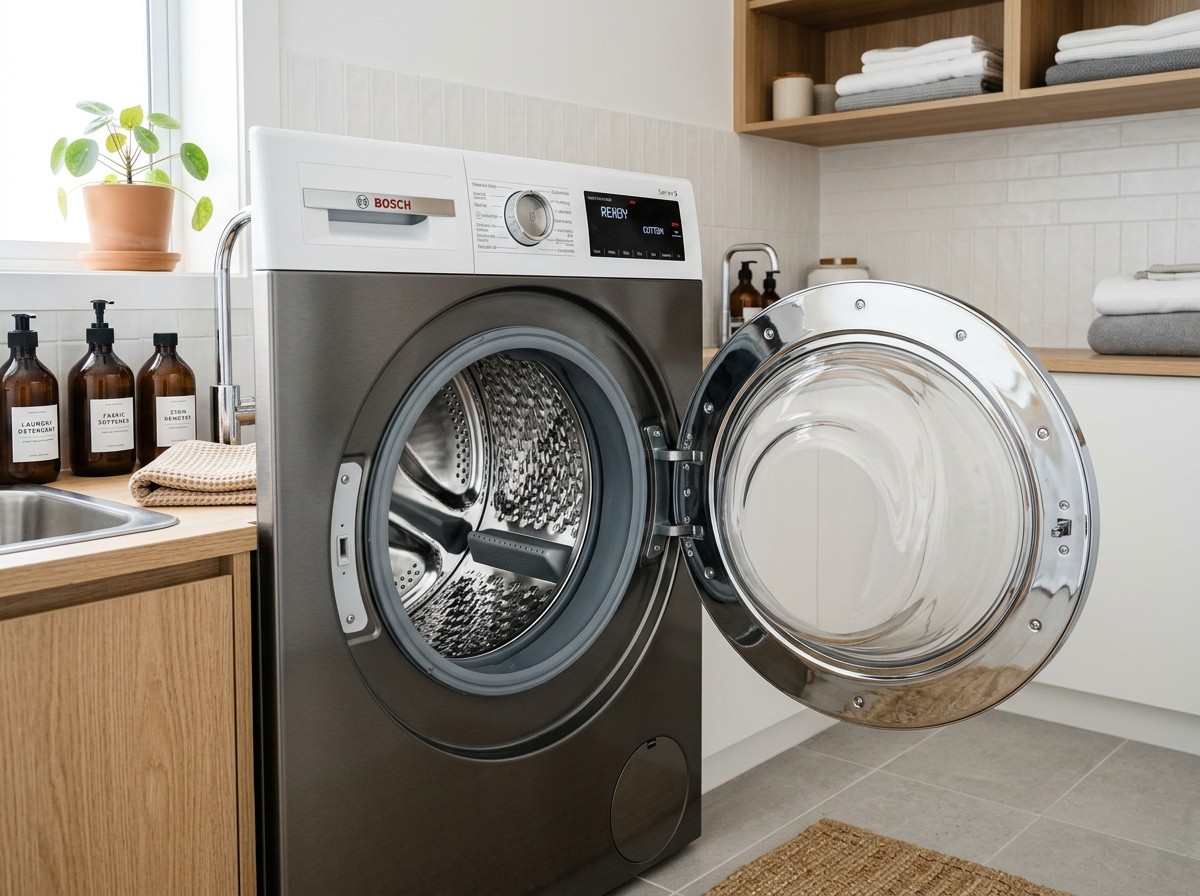
Musty odor often comes from moisture and residue in the door gasket, dispenser or an accessible drain filter, but the cause is model- and condition-specific. Cleaning can reduce odor; it cannot promise a permanent fix. Follow the manual, start with the lowest-risk step, and never mix bleach, vinegar, ammonia or other cleaners.
What you will need
- Microfiber cloths or soft towels
- Shallow baking pan or bowl (to catch drain water)
- Old toothbrush
- Warm water and a mild cleaner only if the owner's manual allows it; use a washer cleaner or diluted bleach only at the manual's stated dose
Step 1: Clean the rubber door gasket
The rubber seal around the drum door has folds that can hold hair, lint, pet fur, detergent residue and water. Inspect the lower fold with the door open, then use the manual-approved method to remove debris and wipe the surface dry.
- Gently peel back the rubber lip with your fingers to inspect the interior groove.
- Remove any physical debris (hairpins, coins, lint clumps).
- Spray your cleaning solution inside the fold and scrub with a microfiber cloth or soft toothbrush.
- Wipe completely dry with a fresh towel. Never leave pooling moisture inside the fold.
Step 2: Clear the lower drain pump filter
Some front-load washers have an owner-accessible drain hose and pump filter; others use a different design or provide no user-accessible filter. Identify the access point in the exact model manual before opening a panel.
- Place a towel and shallow pan directly beneath the access door.
- Open the access panel and pull out the small black rubber drain hose.
- Remove the hose plug and let all trapped stagnant water (typically 1 to 2 cups) drain into your pan. Replace the plug securely.
- Turn the main round filter knob counter-clockwise to unscrew and remove it.
- Rinse the filter mesh under warm running tap water and remove all trapped lint and gunk.
- Inspect the pump housing with a flashlight, screw the filter back in firmly until tight, and close the access door.
Step 3: Wash the detergent drawer
Detergent and softener residue can collect in the drawer and siphon channels. Remove it only as the manual directs, rinse the parts thoroughly and let them dry before reinstalling. Use the detergent quantity printed on the product and manual rather than a universal tablespoon rule.
Step 4: Run a hot Tub Clean cycle
Once the physical components are clean, run the manual-approved Tub Clean, Clean Washer or hottest maintenance cycle with the approved cleaner and dose. Do not improvise a bleach quantity, combine products or add laundry unless the manual says to.
3 habits that reduce recurring odor
- Vent after use: Leave the door or drawer open only as the manual and household safety allow so moisture can evaporate.
- Measure detergent: Use the product label and model manual; excess HE detergent can leave residue, while too little may not clean the load.
- Dry the gasket: Wipe visible water and residue from the lower fold regularly, especially after the last load.
Keep the laundry loop together: review dryer vent maintenance, washer-dryer combo fit, and a realistic cleaning routine.
Sources and manufacturer cleaning guides
- Whirlpool Care Guide: Cleaning Front-Load Washers — gasket, dispenser and maintenance guidance.
- LG Support: Cleaning the Drain Pump Filter — model-specific access and drainage guidance.
- ENERGY STAR: Clothes Washers — efficient washer maintenance context.